
1. Customer Trust: The Currency of Modern Commerce
Trust drives every successful customer relationship. In retail and hospitality, where loyalty and repeat business are essential, a single data breach can permanently erode that trust. When customers pay at your terminal, they assume their information is protected. A 2024 PwC study found that 87 percent of customers would stop doing business with a company they do not trust to protect their data.
Modern POS systems handle thousands of transactions daily. Without strong encryption and consistent patching, they can become prime targets for cybercriminals. Conversely, businesses that deploy endpoint protection, multi-factor authentication, and network segmentation show a commitment to responsible data handling. This commitment translates directly into customer confidence and brand loyalty.
A secure POS system is a signal of integrity and professionalism that builds lasting digital trust.
2. Compliance with PCI DSS and SOC-2: Turning Obligation into Advantage
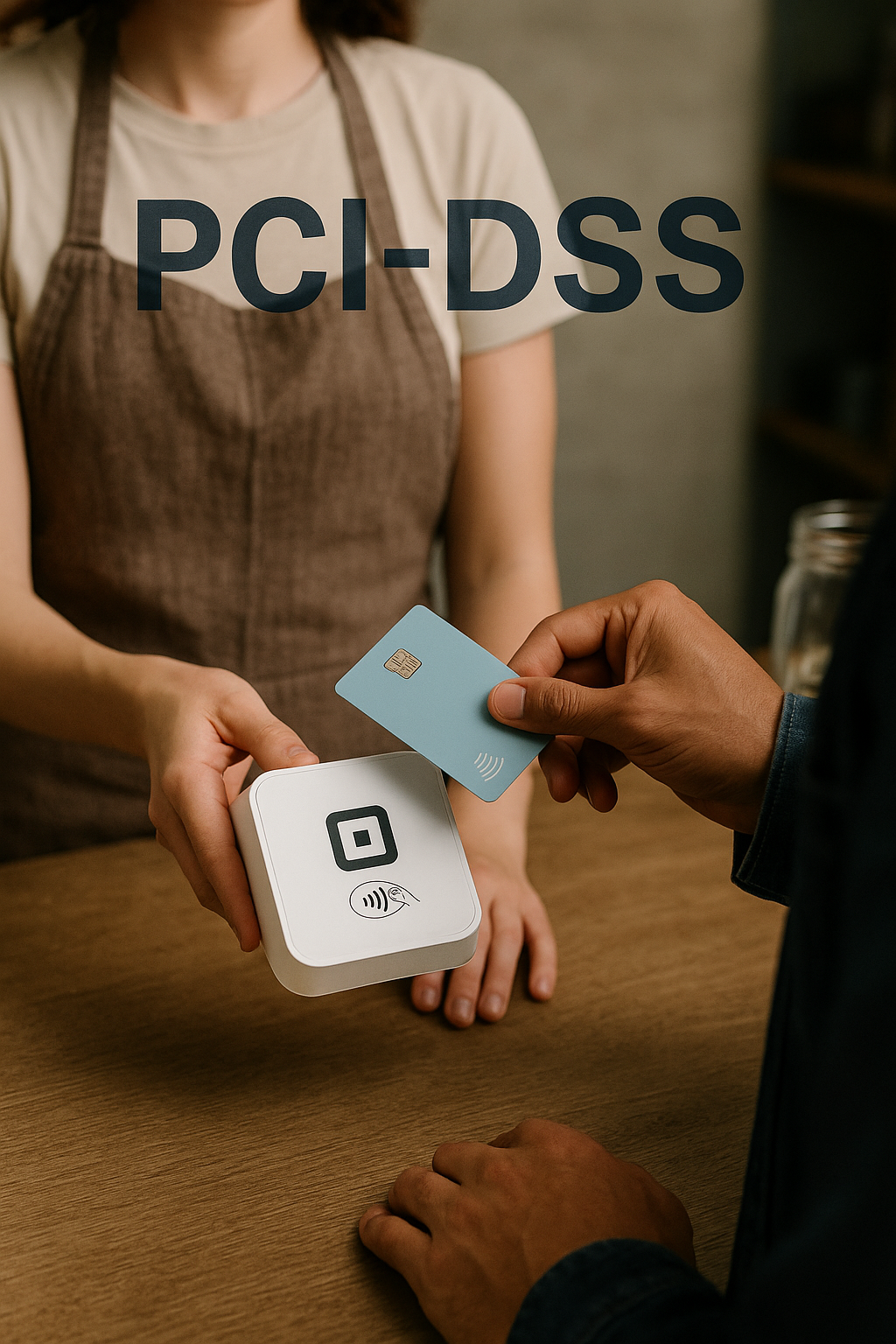
Compliance with PCI DSS and SOC-2 is often viewed as a regulatory requirement, but it also strengthens credibility and competitive edge. These frameworks define the baseline for secure payment processing and responsible data management.
Yet compliance gaps are widespread. A recent study revealed that 86 percent of systems handling payment data had at least one PCI DSS violation (arXiv, 2024). This highlights the need for continuous monitoring rather than one-time audits. PCI DSS ensures encryption of cardholder data and regular system testing. SOC-2 adds governance, access control, and incident response accountability.
Businesses that achieve and maintain compliance reduce liability, enhance their eligibility for cybersecurity insurance, and assure partners that they operate with discipline and transparency. In a market where consumer trust is scarce, compliance becomes an advantage, not an obligation.
3. Fraud Prevention: Defending Against POS Malware and Insider Threats
POS systems sit at the intersection of technology and finance, making them prime fraud targets. The FBI and CISA continue to report high activity from POS malware campaigns, which exploit outdated software or weak credentials. Coinlaw’s 2025 data shows that 8 percent of all retail breaches originated from outdated POS systems.
POS malware can scrape memory to steal card data in real time. Meanwhile, insider threats and credential theft can also lead to fraud or compliance failures. A layered defense strategy is essential. Implement hardware security modules to encrypt card data, segment networks to isolate payment terminals, and deploy continuous monitoring and logging to detect anomalies.
Fraud prevention is not simply loss mitigation. It protects cash flow, brand reputation, and long-term business continuity.
4. Operational Security: Ensuring Continuity and Resilience
Every minute your POS system is down, you lose revenue and customer confidence. Operational security ensures continuous service and resilience. 80 percent of retailers report at least one cybersecurity incident annually (Lincsell, 2025). Many of these incidents result in downtime or ransomware lockouts that halt sales entirely.
Furthermore, 18 percent of businesses still rely on outdated POS hardware that cannot support modern security tools (Coinlaw, 2025). This significantly increases risk exposure and regulatory noncompliance. To strengthen resilience, businesses must implement regular patching, enforce Zero Trust access, maintain backups, and deploy network monitoring systems capable of detecting anomalies early.
When POS systems are secured and monitored, operations remain stable even under pressure. Strong operational security is business continuity in action.
Building Digital Trust: Beyond Compliance and Control
POS security connects technology with customer experience and financial stability. Investing in protection builds measurable advantages: higher customer confidence, fewer fraud incidents, smoother audits, and improved business continuity. With average breach costs approaching $5 million per incident, prevention delivers clear return on investment.
At PWNSentinel, we believe that digital trust starts at the point of sale. Each secure transaction strengthens your reputation and your relationship with every customer.
Sources
- Sangfor Technologies (2025). Retail Cybersecurity Risks and Data Breaches.
- Invensis (2025). Cost of Customer Data Breaches in Retail.
- arXiv (2024). PCI DSS Compliance Violations Study.
- Coinlaw (2025). Point-of-Sale Security Statistics.
- Lincsell (2025). Retail Cybersecurity and POS Threat Landscape.
- PwC (2024). Consumer Trust in Data Stewardship Survey.